An article sort of caught my eye a few days ago, and I found it interesting as I’m still trying to claw my way through Pynchon’s Gravity’s Rainbow. It’s curious, esp. after listening to a panel discussion at the Festival of Words about the joys of the internet, and how writers can anonymously comment or review their own books.

I spent a few hours at the TWE today. A great experience. I talked poetry with a wonderful group of fledgling writers. It was a great opportunity and I liked their energy.
Poetry exercises and a found title

…a list of exercises derived from things I thought I saw, and subsequently thought about far too much during my walk through Wascana Centre:

1. Write a poem about how many white dogs you see in the park (I swear it must have been some sort of dog convention as they all looked like the same breed (but what do I know about dogs?))

2. Write a poem on why the dogs seek contact with other dogs and with people in the park, while people tend to look away from each other.

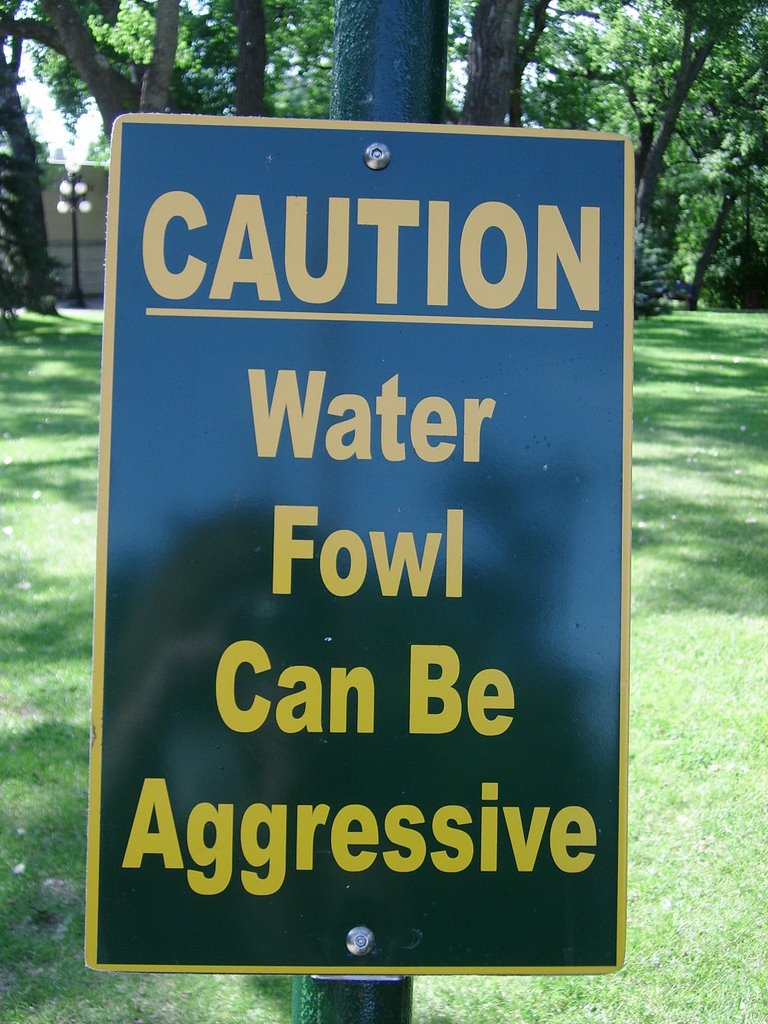
3. Write a poem about the horse dung on the sidewalk (yes, horse–if not, I’m afraid there is something very wrong with the geese).

4. Write a poem about the difference between those really walking and those walking simply.

5. Title of a poem: On Being Susan Sontag (although I’m not quite sure I’m up to that one yet).

6. Write a poem about the people who exercise lists about writing poems.

A wave

…of something hits me every spring and I place fish in the rain barrel to eat mosquito larvae, and it usually works, if the fish live. This year 2 pond goldfish and 2 calico fantails have survived for well over a month (even with the June threat of being washed away from too much rain). Another wave just hit me (I must amuse myself somehow). A recent email has got me thinking about names for the goldfish. I’ve decided to call them all “untitled”. “untitled #1” “untitled #2” etc.

Another quote

…this time from Patrick Friesen’s Essays & Meditations: “Poetry is a fine sanity. Anything can happen there; it is not risk-free territory”.

The posting on this blog will be rather sporadic for the next while. I’ll be sending the mind elsewhere to determine a state of sanity–perhaps finding the reverse is true.

I’ll be taking in the Saskatchewan Festival of Words, seeing some of my favourite authors read from their works, and taking part in the Karen Solie master class (to which I hear there are still some spots available, if you’re eager to join the fun).

And, don’t be alarmed– I’ve put up the comments moderation for awhile because, as entertaining as porn spam is, I’m just not that amused.

Here is a quote from the Matthew Collings book This is Modern Art. I found it quite interesting. It’s some stuff that’s made me wonder how or does it apply to writing? (Mostly I’m thinking of the modernists and post-modernists— how our own writing reflects/addresses/responds (rejects?) them).

[Jasper] Johns was influential on the development of both Pop art and Conceptual art in the 1960’s and even, partly, on Minimal art—the three big movements of the 60’s from which all subsequent movements stem and which stand at the junction of Modernism and Post-Modernism. He was sensitive to the beauty and loveliness of Modern art but emotionally detached from it. Instead of faking a feeling of identification with it, he created a form that expressed his detachment. And it was a form that seemed to sum up and crystallize a whole state of mind. An exquisitely aesthetic surface like a system of communicating points—like electrical points—only with all the points short-circuited.

Of course Picasso could never do that because he couldn’t be Post-Modern. He couldn’t be Post-himself. He could only express himself. That’s why Picasso and Matisse are considered part of the past and not part of the present. They express themselves and their sensations. They express the world through their sensation of it. But we can’t take that kind of thing for granted any more.

Even with them, we can’t totally take it for granted that that’s what they were doing because it’s us thinking about them and we think in a different way to them. But we can certainly believe it a lot more with them than we can with us. In fact we have to believe it because it’s one of the beliefs that define us—that they were self-expressive and we are not. Or not in the same way. We are ironic. They were not (123-24).

Not so deep thoughts

…I’m finding the connections between the artist and the art interesting. I find myself paddling deeper and deeper into the creative process of art where I think the process is similar to that of writing. Last night I went to bed thinking of concepts and this morning my questions broadened out to structures of poems, and I found this question “How do we organize life” (the opening question in the PBS series Art21) stimulating. What is it we are trying to structure, ourselves or the world around us? Do I write to understand my identity or to understand the world around me? Sometimes, I find these questions simply unrealistic, meaning that, how can I write something if I’m continuously worried about how and why I’m writing it, but at the same time, the unconscious reasons for writing it might be shaping the structure of the piece. (If that makes any sense).

The poem as a structure is what I thought next. The structure is the poem, the shape of the poem, the body of the poem, and the words (or language) in a poem. One artist in the PBS series, Richard Tuttle states “A painting or a sculpture really exists somewhere between what it is and what it is not”, perhaps a poem is like this as well. Perhaps the connection with reader, the text, and the words places the poem somewhere in-between. What does this mean for the writer? I’ve stopped thinking about this here, mostly because I have to go to work, and because I want to read some more. (Place thoughts here). Or not.

The Weather


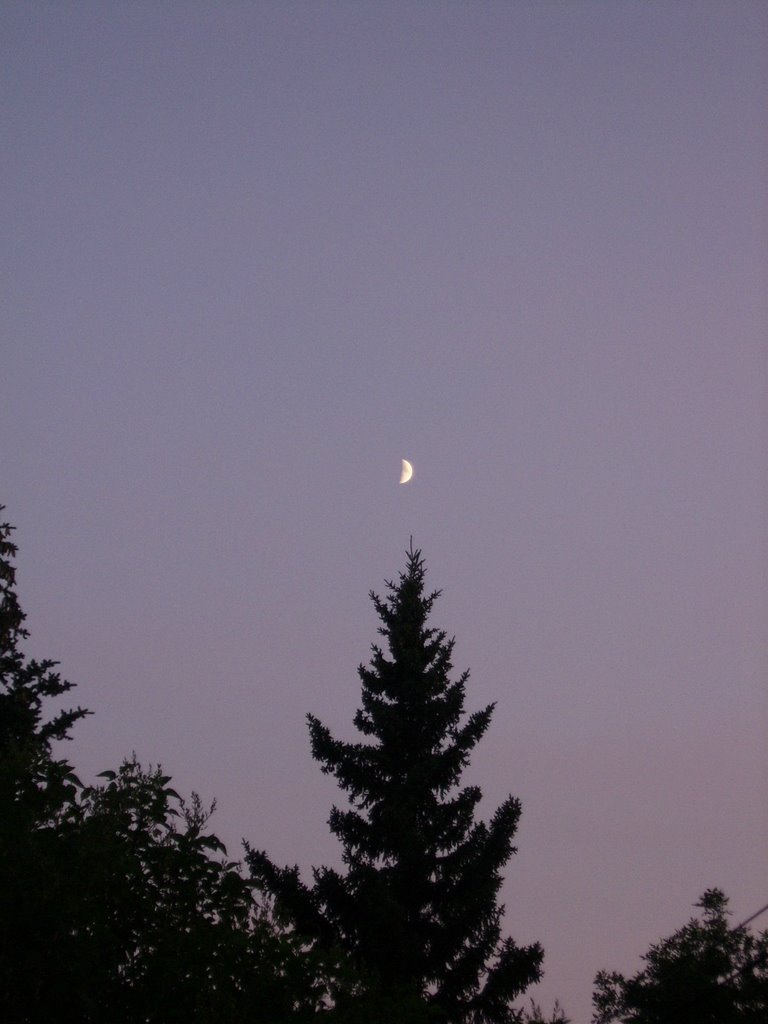
…tonight was perfect for a bonfire (the smoke hovered over the garden) and less than half a moon hovering like a star above the tree.

A wonderful

new book found its way into my hands this morning. Daniel Scott Tysdal’s first book of poetry is gorgeous, interesting and worth a thorough read. Congrats Dan!